
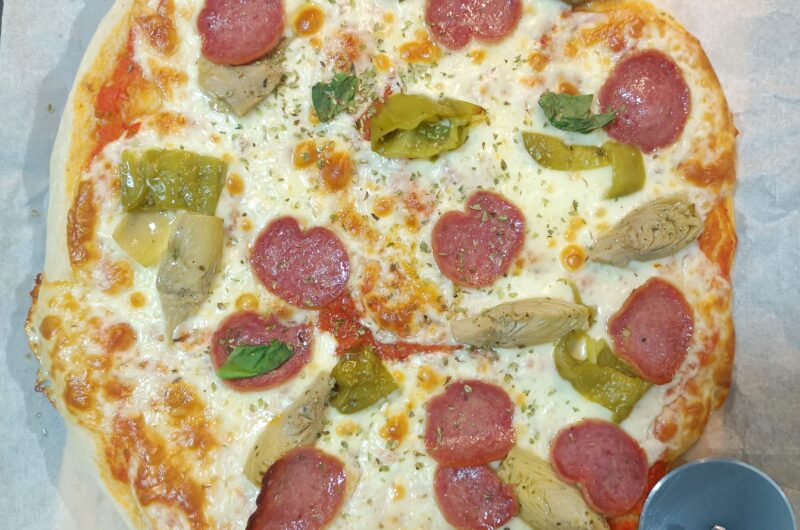
Homemade pepperoni pizza is a classic favourite, with a crisp, golden crust, rich tomato sauce, melted mozzarella, and savoury pepperoni in every bite. Made with homemade pizza dough, it brings together a handful of familiar ingredients to create a satisfying meal for a relaxed family dinner or a weekend pizza night.
The secret to a great homemade pizza is getting the balance right. A thin layer of tomato sauce keeps the dough from becoming soggy, mozzarella melts into a creamy topping, and pepperoni adds plenty of flavour as it cooks. Baking the pizza in a thoroughly preheated oven helps the crust develop a golden base while the cheese becomes bubbly.
This recipe is easy to customise with your favourite toppings, but the classic combination of tomato, mozzarella, and pepperoni is hard to beat. Serve it straight from the oven with fresh basil and a simple green salad on the side.
Why You’ll Love This Recipe
- A classic combination: Tomato sauce, mozzarella, and pepperoni deliver familiar pizzeria-style flavours.
- Homemade pizza dough: Use my homemade pizza dough recipe for a fresh, flavourful base.
- Crisp edges and a cheesy centre: A hot oven helps the crust bake properly while the cheese melts.
- Easy to customise: Adjust the pepperoni, add chilli flakes, or include your favourite vegetables.
- Perfect for sharing: Cut into slices and serve for family meals, casual gatherings, or a homemade pizza night.
Homemade Pepperoni Pizza
Course: MainCuisine: ItalianDifficulty: Easy2-3
servings30
minutes12
minutesIngredients
For the dough:
Homemade pizza dough: Prepare the dough using my homemade pizza dough recipe. Allow enough time for mixing and rising before assembling the pizza.For the topping:
2 tablespoons olive oil200 g good quality tomato passata or crushed tomatoes
200 g mozzarella, sliced or shredded
80–100 g pepperoni slices
Salt & freshly ground black pepper
Fresh basil leaves (for garnish)
Optional: a pinch of chilli flakes
Directions
- Preheat the oven
Preheat the oven to 250°C conventional or the highest temperature recommended for your oven and pizza dough. If using a fan oven, follow the manufacturer’s guidance for high-temperature baking.
Place a pizza stone or heavy baking tray in the oven while it heats. Allow the stone to heat thoroughly according to its manufacturer’s instructions; a properly heated cooking surface helps the base become crisp.
If your oven does not reach 250°C, use its highest suitable temperature and allow for a potentially longer baking time. - Prepare the pizza dough
Once your dough has completed its rising time, transfer it to a lightly floured work surface.
Gently stretch or roll the dough into your preferred shape and thickness. A thinner base will generally bake more quickly and become crisper, while a thicker base will have a softer, breadier texture.
Transfer the shaped dough to a sheet of baking parchment suitable for the temperature you are using. Check the parchment packaging for its maximum safe temperature. If it is not suitable for high-temperature baking, use an appropriate pizza peel and follow the manufacturer’s instructions for your equipment. - Add the tomato sauce
Spread the tomato passata or crushed tomatoes over the dough in a thin, even layer, leaving a small border around the edge for the crust.
Avoid adding too much sauce, as excess moisture can prevent the centre of the pizza from cooking properly. If your tomatoes are particularly watery, drain them slightly before spreading them over the dough.
Season lightly with salt and freshly ground black pepper. If the passata is already seasoned, taste it first to avoid adding too much salt. - Add the mozzarella and pepperoni
Distribute the mozzarella evenly over the tomato sauce. If using fresh mozzarella, pat it dry with kitchen paper first to remove excess moisture.
Arrange the pepperoni slices across the cheese, spreading them evenly so each portion receives a good amount of topping.
Drizzle lightly with olive oil. If you enjoy a spicier pizza, sprinkle a few chilli flakes over the top.
For the best texture, avoid overloading the pizza with cheese and toppings. Keeping the topping layer balanced helps the dough cook evenly. - Bake the pizza
Carefully transfer the pizza to the preheated pizza stone or baking tray, following the instructions for your equipment.
Bake for approximately 12–15 minutes, checking it towards the end of the cooking time. The pizza is ready when the crust is golden, the cheese is melted and bubbling, and the base is cooked through.
The exact time will depend on your oven temperature, dough thickness, and the type of cooking surface used. A thinner pizza in a very hot oven may cook more quickly.
Use suitable oven gloves when handling the hot tray or stone. - Finish and serve
Remove the pizza from the oven and let it rest for a minute or two before slicing.
Scatter fresh basil leaves over the top and finish with a light drizzle of olive oil if desired. Taste before adding extra salt, as pepperoni and mozzarella can already contribute plenty of seasoning.
Slice and serve while the cheese is warm and the crust is at its crispest.
Notes
- Heat the oven thoroughly: A fully preheated oven and hot cooking surface help the base cook and brown.
Use a light layer of sauce: Too much liquid can make the centre soggy.
Drain fresh mozzarella: Removing excess moisture helps prevent a watery topping.
Avoid overloading the dough: Too many toppings can slow cooking and weigh down the crust.
Follow the dough recipe: Proper kneading and rising make a difference to the final texture.
Add fresh basil after baking: This preserves its colour and fresh aroma.
Watch the pizza closely: At high temperatures, the crust can brown quickly, particularly around the edges.
Variations and Topping Ideas
Extra cheese: Add a little grated Parmesan before baking for a stronger, savoury flavour.
Spicy pepperoni pizza: Sprinkle chilli flakes over the toppings before baking, or add a little after baking for a more pronounced heat.
Vegetable topping: Add thinly sliced mushrooms, peppers, or red onion. Use moderate quantities and avoid vegetables that release excessive moisture unless they have been cooked or drained first.
Fresh basil and mozzarella: For a fresher finish, use well-drained mozzarella and add the basil only after the pizza comes out of the oven.
Thin and crispy base: Stretch the dough thinner and use a thoroughly preheated cooking surface. Keep the topping layer light and check the pizza earlier.
What to Serve with Pepperoni Pizza
Homemade pepperoni pizza is satisfying on its own, but a simple side dish can complete the meal.
- Green salad: Crisp lettuce, cucumber, and a light vinaigrette provide a fresh contrast to the cheese and pepperoni.
- Tomato salad: Fresh tomatoes and basil complement the tomato sauce on the pizza.
- Roasted vegetables: Serve with roasted peppers, courgettes, or aubergine for a more substantial meal.
- Homemade garlic bread: A good option for a sharing meal, although the pizza is already rich and filling.
Make-Ahead Instructions
You can prepare the pizza dough in advance according to the instructions in the linked dough recipe. If the dough is refrigerated, allow it to come to the recommended temperature for shaping before assembling the pizza.
For easier preparation, measure the toppings, drain the mozzarella, and prepare the tomato sauce ahead of time. Assemble the pizza just before baking for the best crust texture.
Storage and Reheating
Refrigeration: Allow leftover pizza to cool slightly, then refrigerate it in an airtight container within two hours of cooking. Store at 4°C or below and eat within 3–4 days.
Oven reheating: Place the slices on a baking tray and reheat in a preheated oven at around 180°C until the cheese is hot and the base has crisped up.
Air fryer reheating: Place a slice in the air fryer basket in a single layer. Reheat at approximately 160–180°C for a few minutes, checking frequently to prevent the crust from over-browning.
Freezing: Cooked pizza slices can be frozen in a suitable airtight container or freezer bag. Separate slices with baking parchment if needed. Thaw in the refrigerator and reheat until thoroughly hot, or reheat from frozen with additional time as necessary.
Frequently Asked Questions
Can I use store-bought pizza dough?
Yes. Ready-made pizza dough is a convenient alternative when you do not have time to prepare your own. Follow the package instructions for shaping and baking, as recommended temperatures and cooking times may differ.
How do I stop homemade pizza from becoming soggy?
Use a hot oven, preheat your pizza stone or tray, spread the sauce thinly, and drain fresh mozzarella thoroughly. Avoid adding too many toppings, especially ingredients that release water during baking.
Can I make pepperoni pizza without a pizza stone?
Absolutely. A heavy baking tray can work well. Preheat it carefully, use equipment suitable for the oven temperature, and follow the instructions for safely transferring the pizza.
When should I add fresh basil?
Add fresh basil after baking. The residual heat will release its aroma without cooking the leaves as intensely as they would be in the oven.
Can I make the pizza spicier?
Yes. Add chilli flakes before baking or sprinkle them over the finished pizza. You can also choose a spicier variety of pepperoni.
How do I know when the pizza is ready?
Look for a golden crust, melted and bubbling cheese, and a cooked base. If the top is browning before the base is ready, check the oven temperature and cooking surface, and adjust the method next time.
Final Thoughts
Homemade pepperoni pizza is a straightforward way to enjoy a classic combination of tomato, mozzarella, and savoury pepperoni using fresh dough. The most important details are to preheat the oven properly, keep the toppings balanced, and avoid adding excess moisture.
Serve it hot with fresh basil and a simple salad for a relaxed homemade meal. Once you are comfortable with the basic method, you can experiment with different cheeses, vegetables, and seasonings while keeping the same reliable pizza-making approach.

[…] as excess moisture can make the centre of the pizza difficult to cook.For a classic option, try my Homemade Pepperoni Pizza, which uses this dough with tomato passata, mozzarella, and […]